This is a bit edgier than the comfort level for most people, so feel free to ignore or abandon it.
This disease had a 40% chance of killing me. The last stroke I had in August, I thought I was dead. I could not speak, could not move, and had no feeling anywhere. I felt the spinning as the EMTs rolled me over, and I felt the turning even though I was unable to feel the touching. Last night I spoke with a friend who has just been diagnosed with yet another relapse of the cancer that almost killed him. This time the intense heated abdominal chemotherapy is not an option, and he is not eligible for the clinical trial he was previously on. He had an ablation procedure on five of the tumors, and the doctors have some hope those dying tumors will help his body learn to fight the cancer. It’ll be 2-3 months until scans give them useful feedback. To say “that sucks” is an unutterably weak statement.
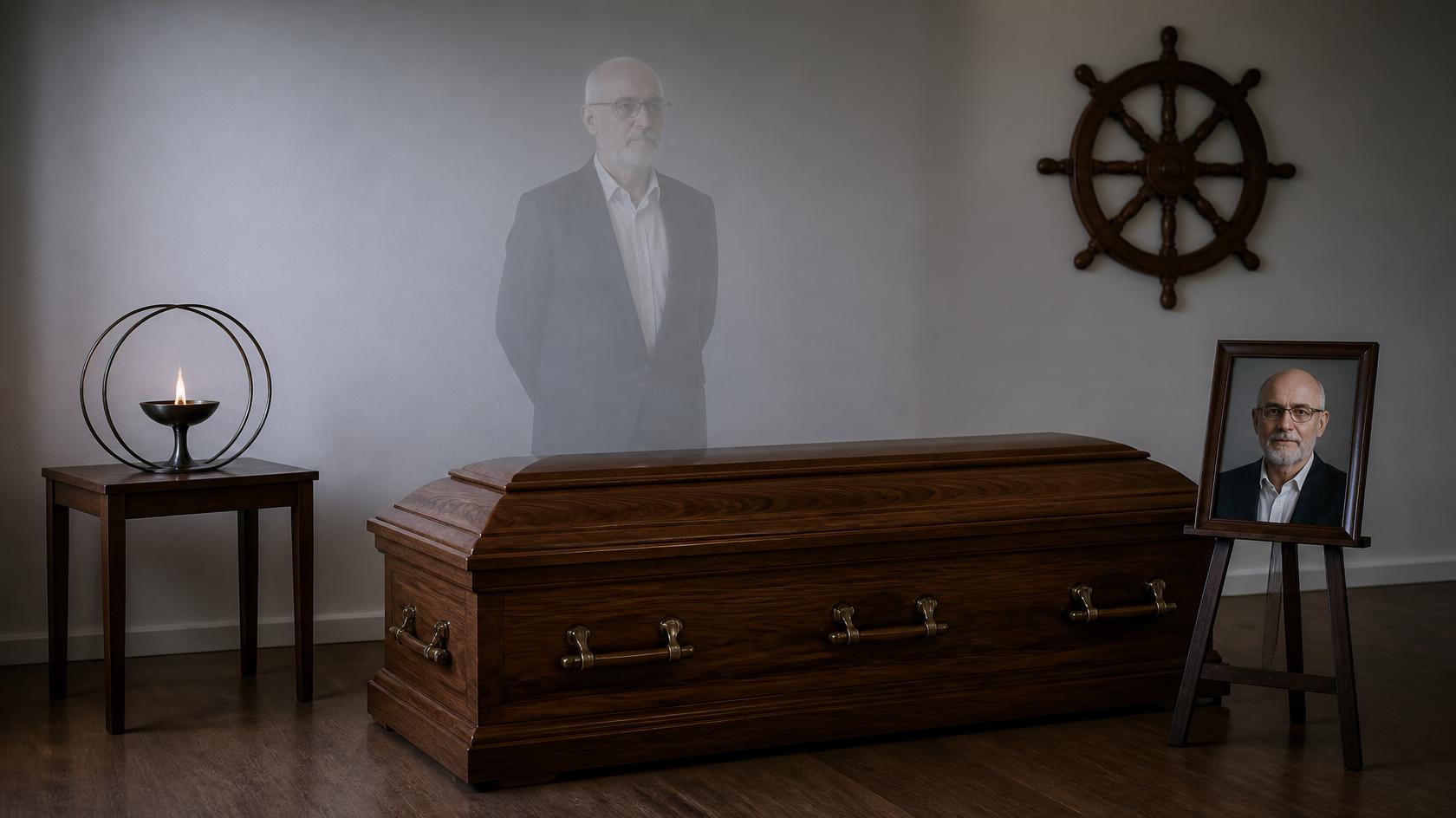
We talked about death and becoming more comfortable with dying. So today, I dug up and refined an earlier effort to create my funeral plan.
A Unitarian Universalist memorial offers total freedom to weave Buddhist philosophy, secular values, and personal passions into a cohesive celebration of a life well lived.
Why is this helpful? Planning your own funeral removes friction, ambiguity, and emotional strain for the people left behind, while ensuring your final wishes are honored. Those left behind can focus on their grief, perhaps find the answers to their deep questions, and avoid conflict over planning since it is all done. I am a little less concerned about my wishes; I’ll be dead and won’t care any more. But it was honestly a pleasure coming up with the music list and ideas for birding, camping, and programming. Speaker guidelines, not included here, were fun. Largely those are to be grounded and have an unsentimental tone, no “disability hero” tropes, and honesty about the disability gear (“Speak of them the same way you’d speak of a good touring bicycle, a solid tent, or an optimized software stack—practical engineering that opened up trails, work, and community.”), be specific with vignettes over generalizations, and be 3-5 minutes long to give others a chance.
Celebration of Life & Transition
Spatial & Accessibility Foundations
- Acoustic & Visual Access: Live captioning / CART transcription projected clearly on screen; assistive listening loops active; printed large-print order of service sheets available.
- Seating Flow: Flat-floor arrangement with integrated, non-segregated wheelchair spaces alongside regular seating.
- Altar / Memory Table Elements: A central chalice and singing bowl, flanked by simple natural objects: binoculars, a favorite field guide, a worn camp mug, bicycle touring ephemera, and a subtle nod to logic/code (e.g., an elegant snippet of clean code printed or an antique computing artifact).
Order of Service
1. Gathering & Ambient Sound
- Soundscape: A mix of early-morning dawn chorus field recordings (wood warblers, thrushes, distant owls) interwoven with warm progressive acoustic guitar or mandolin.
- Chris Thile & Edgar Meyer, “Why Only One?” or “Ham and Cheese” (Intricate, exploratory, conversational acoustic bass and mandolin).
- Béla Fleck, Zakir Hussain, Edgar Meyer , “The Melody of Rhythm” movements (Deep rhythm, spaciousness, and bridge between traditions).
- Tony Rice, “Church Street Blues” (Direct, clean acoustic flatpicking grounded in narrative)
- Visual Loop: Slides of wilderness trails, bird sightings, bikepacking trips, and candid moments with family and friends.
2. Welcoming & Chalice Lighting
(The officiant, minister, or a close friend approaches the podium. An ASL interpreter or live transcript confirms connection.)
Leader:
“We gather today to remember, honor, and celebrate a full, deliberate, and deeply curious life. In our Unitarian Universalist tradition, we do not gather to impose dogmas on mystery, but to hold space for love, grief, and shared memory. We light this flame as a beacon of truth, interconnection, and enduring warmth.”
(A designated loved one lights the UU Chalice.)
“May the light remind us of the spark of consciousness that animated our friend—a mind that sought clarity in systems, beauty in migration patterns, and grace in the present moment.”
3. Sounding the Singing Bowl & Grounding Meditation
(A brass singing bowl is struck three times, allowing the resonance to fully decay between strikes.)
Leader:
“In Buddhist practice, we remember that nothing exists in isolation. Everything is interdependent; everything is impermanent. We pause now in silence to ground ourselves in breath, feeling the shared air that unites everyone in this room with the wild world outside.”
(Two minutes of shared silent reflection, ending with a final chime.)
4. Reading: Interdependence & The Natural World
(Read by a friend or relative.)
Reader:
“A life is not a closed circuit. Like a watershed or a flock wheeling across an autumn sky, we are continuous with our surroundings. Thich Nhat Hanh reminds us that a cloud never truly dies; it transforms into rain, enters the river, rises as steam, and nourishes the soil.
Our friend understood this deeply. Whether watching a hawk catch a thermal, navigating miles of trail under open skies, or tracing the elegant recursion of a software system, he saw the underlying elegance of how things fit together. His physical form has returned to the elements, but the resonance of his curiosity, humor, and persistence remains woven into all of us.”
From Thich Nhat Hanh, adapted from “No Death, No Fear”
“This body is not me; I am not caught in this body; I am life without boundaries, I have never been born and I have never died. Look at the ocean and the sky filled with stars, manifestations from my wondrous true mind.
When we look into the heart of a bird in flight, the current of a river, or the quiet soil of the campsite at dusk, nothing is lost. A cloud does not become nothing when it rains. It becomes the stream, the tree, the breath. Do not look for me only in a chair or an urn; look for me along the tree line, in the dawn migration, in the clean logic of a problem solved, and in the quiet strength you find when the road gets steep.”
5. Musical Reflection
- Suggested Piece: An instrumental acoustic arrangement (acoustic guitar, cello, or fiddle) evoking movement, open country, and contemplation.
- Yo-Yo Ma, Stuart Duncan, Edgar Meyer, Chris Thile, “Attaboy” or “Here and Heaven” from The Goat Rodeo Sessions (Lyrical, reflective, balancing melancholy with lift).
- Dawes, “All Your Favorite Bands” (Instrumental acoustic version, or vocal for a warm secular blessing of fellowship).
6. Reflections & Eulogies
Reflections on the Intersect of Code, Nature, and Mind
“To write code is to build invisible cathedrals out of logic and patience. It demands that we see reality exactly as it is, not as we wish it to be, debugging the assumptions we didn’t know we carried.
To watch birds is the same discipline turned outward: quiet vigilance, learning to look past the foliage, waiting for the sudden flash of wing. Both require patience. Both require presence.
Our lives are not judged by the absence of friction, but by the elegance with which we navigate it. Let our memory of him be an invitation to pay closer attention—to the syntax of our thoughts, to the wild lives sharing our skies, and to each other.”
- Family & Close Friends: Remembrances focusing on shared adventures, campfires, quiet mornings with binoculars, and his dry wit and generosity.
- Colleagues & Collaborators: Stories highlighting his intellectual craft—treating programming not merely as work, but as a discipline of precision, architecture, and solving hard problems with quiet care.
- Community & Advocacy: Reflections on living fully with disability, adapting to change with stubborn resilience, and demanding dignity and access without sentimentality.
Guidance: - Tone: Grounded, unsentimental, and laced with dry wit. Acknowledge hard realities without descending into pity or melodrama.
- Avoid the “Inspirational Disability” Trope:
- Do not frame using a power wheelchair or experiencing sensory/mobility loss as a “tragic struggle heroically overcome,” nor use clichés like “he is finally free and running in heaven.”
- Instead: Speak of mobility aids, tech setups, and adaptations as the practical tools of liberation and engineering they were—gear that enabled miles logged, trails explored, and work accomplished.
- Lean Into Specifics Over Generalities:
- Mention particular trail encounters, stubborn bugs fixed late at night, specific bird calls identified by ear or sight, or memorable gear setups around a camp stove.
- Recall his skepticism of sloppy assumptions, his dry one-liners, and his appreciation for well-structured systems (human or technical).
- Time Target: 3 to 5 minutes per speaker. Precision and economy of words always honor a programmer and a meditator far more than rambling praise.
7. Open Sharing / Community Tributes
Leader:
“We invite anyone moved to share a brief story, an observation, or a moment of laughter from walking, riding, or sitting alongside him.”
(Microphone brought to participants; live captions projected.)
8. Reading: On Form and Emptiness (Buddhist Reflection)
(Read by a fellow practitioner or family member.)
Reader:
“Form is emptiness, emptiness is form. In letting go of the physical vessel, the wheels that gave freedom, the devices that connected thought to world, we recognize that awareness itself has no bounds. The energy that watched the birds fly north each spring has not vanished; it has simply ceased its particular pattern and rejoined the whole.”
9. Closing Words & Chalice Extinguishing
Leader:
“We extinguish this chalice flame, but we carry its warmth and clarity in our minds. As you leave today, look up into the trees. Listen for the calls at daybreak. Value the quiet discipline of doing things well, and meet the unfolding path ahead with courage and presence.”
(The chalice is extinguished.)
10. Recessional & Fellowship
- Exit Music: An uplifting, brisk acoustic tune or traditional reel that brings people out of reverence and into joyful conversation.
- Nickel Creek, “The Smoothie Song” or an upbeat, driving traditional Scottish/Irish reel set (e.g., “The Mason’s Apron” or “Drowsy Maggie”) to immediately shift the energy into movement, motion, and conversation
- Reception: Gathering for coffee, camp snacks, or local craft drinks to swap stories, inspect photo boards, and connect.
Leave a Reply